Introduction
Moving into a new home is exciting, especially when it comes with the bonus of solar panels already installed. However, inheriting a solar panel system requires understanding how to properly care for and maintain it. Whether you’re a first-time solar owner or simply new to this system, proper solar panel maintenance after moving is essential to ensure optimal performance and longevity.
Understanding Your New Solar Panel System
When you purchase a home with an existing solar installation, you’re not just getting free electricity—you’re taking on the responsibility of maintaining a sophisticated energy system. Unlike traditional homes, properties with solar panels require specific attention to keep the system running efficiently.
The first step in maintaining existing solar panels is recognizing that every system is unique. Different manufacturers, installation dates, and component types mean your approach should be tailored to your specific setup. Taking time to understand what you’ve inherited will save you money and headaches down the road.
Inspecting Your Inherited Solar Panel System
Before settling into your new routine, conduct a thorough new home solar panel inspection. Start by walking around your property to locate all system components. Solar systems typically consist of roof-mounted panels, an inverter (usually in your garage or on an exterior wall), a monitoring system, and the connection to your electrical panel.
Look for any visible damage on the panels themselves. Cracks, discoloration, or loose connections could indicate problems that need immediate attention. Check the mounting hardware to ensure panels are securely fastened and examine the conduit running from your roof to the inverter for any signs of wear or damage.
Understanding the age of your system is crucial. Solar panels typically come with 25-year warranties, but their efficiency gradually decreases over time. If possible, obtain information about when the system was installed and what the expected lifespan might be. Request any previous maintenance records of the prior homeowner—this documentation provides valuable insight into the system’s history and any recurring issues.
Understanding Your Solar Panel Documentation
One of the most important tasks when moving into house with solar panels is gathering all relevant documentation. These papers contain critical information about warranties, system specifications, and maintenance requirements.
Start by searching for installation manuals, warranty certificates, and service records. The previous homeowner should have transferred these documents during closing, but if they didn’t, contact the original installer directly. Most reputable solar companies maintain records and can provide duplicate documentation.
Your system likely has a monitoring platform that tracks energy production. Ensure you have login credentials for this app or website. Monitoring system performance through these platforms helps you quickly identify when something isn’t working correctly. If the previous owner didn’t provide this information, contact the monitoring service provider with your address and proof of ownership.
Essential Solar Panel Maintenance Tasks
Solar panel care for new homeowners doesn’t have to be complicated, but it does require consistency. Here are the fundamental maintenance tasks you should incorporate into your routine.
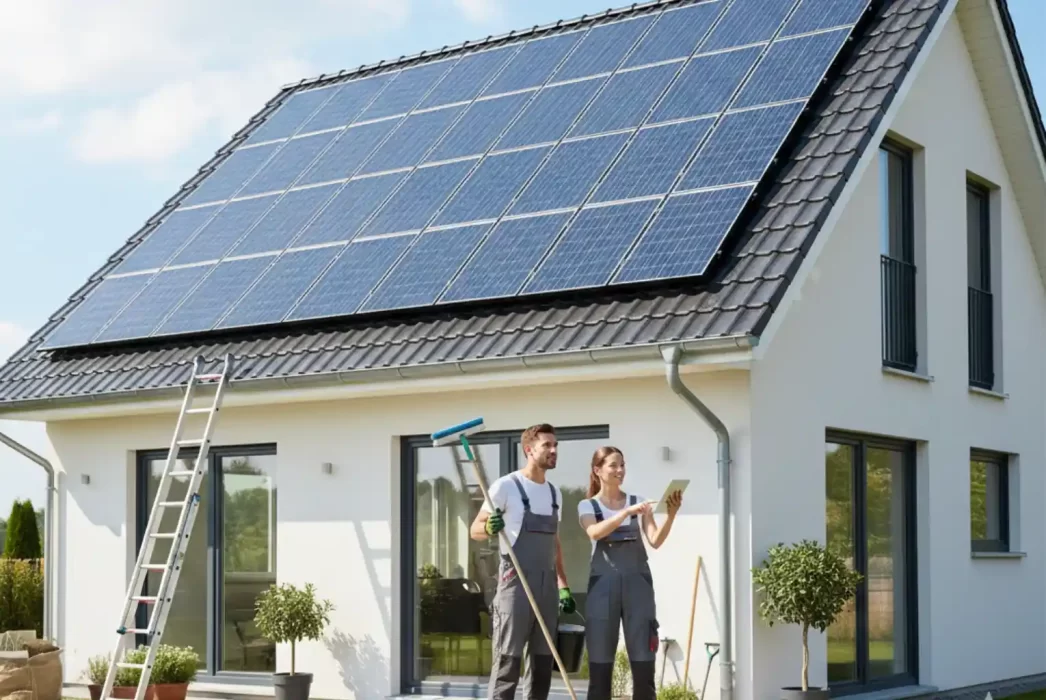
Cleaning your solar panels properly is perhaps the most visible maintenance task. Dust, pollen, bird droppings, and leaves can accumulate on panel surfaces, reducing their ability to absorb sunlight. In most climates, rain provides adequate cleaning, but in dry regions or during extended dry spells, manual cleaning may be necessary.
When cleaning, use only water and a soft brush or squeegee. Avoid harsh chemicals or abrasive materials that could scratch the panel surface. The best time to clean is early morning or evening when panels are cool—cleaning hot panels with cold water can cause thermal shock and potential cracking.
Inspecting mounting hardware ensures your panels remain securely attached to your roof. Check for loose bolts, corroded brackets, or any signs that the mounting system has shifted. While you’re examining the mounting, look at the area around the panels for any roof damage that might have occurred during installation or weathering.
The inverter is your system’s brain, converting DC power from the panels into usable AC power for your home. Check your inverter regularly for error messages or warning lights. Most modern inverters have indicator lights showing operational status—green typically means everything is working, while red or flashing lights indicate problems requiring attention.
Vegetation management is often overlooked but critically important. Trees and shrubs that were small at installation may have grown enough to cast shadows on your panels. Even partial shading can significantly impact system performance. Trim back any branches that shade your panels, especially during peak sun hours.
Setting Up a Maintenance Schedule
Establishing a routine solar panel maintenance checklist helps ensure nothing gets overlooked. Monthly visual inspections take just a few minutes but can catch problems early. Walk around your property looking at the panels from ground level, checking for obvious damage or debris accumulation.
Quarterly performance reviews involve analysing your monitoring data. Compare current energy production to previous quarters and the same period last year. Significant drops in output could indicate developing issues that need professional attention.
Schedule annual professional inspections to have a qualified technician thoroughly examine your system. These experts can identify subtle problems you might miss and perform maintenance tasks requiring specialized knowledge or equipment. Many solar companies offer annual maintenance packages designed explicitly for inherited solar panel systems.
Seasonal considerations matter too. Before winter, ensure panels are clean and free of debris that could trap snow. In spring, check for any damage from winter weather. Summer is ideal for vegetation management, while fall is perfect for clearing leaves before they decompose and create stubborn stains.
Common Issues in Pre-Owned Solar Systems
Being aware of typical problems helps you identify issues quickly. Efficiency loss is normal over time, but sudden drops indicate problems. If your system is producing significantly less power than expected, investigate immediately.
Inverter problems are among the most common issues in older systems. These components typically have shorter lifespans than panels themselves—often 10-15 years compared to 25+ years for panels. Strange noises, error messages, or complete shutdowns require professional attention.
Panel degradation happens gradually but becomes noticeable in systems over 15 years old. While individual panel failure is rare, it does occur. Monitoring systems can often identify underperforming panels, allowing targeted replacement rather than full system overhaul.
Working with Solar Professionals
Knowing when to call a solar technician is crucial. While basic cleaning and visual inspections are DIY-friendly, electrical work, inverter repairs, and panel replacement require professional expertise. Never attempt to work on electrical components yourself—solar systems carry dangerous voltage levels.
Finding qualified service providers in your area ensures proper care. Look for certified technicians with experience in your specific system type. Many areas have solar maintenance companies specializing in solar system takeover maintenance for new homeowners.
Understanding service agreements and warranties protects your investment. If your system is still under warranty, unauthorized repairs might void coverage. Always verify warranty status before scheduling service and ensure any work performed doesn’t impact warranty protection.
Conclusion
Taking over a solar panel system in your new home is an asset that requires proper attention. By following this solar panel maintenance checklist and establishing regular inspection routines, you’ll ensure your system continues providing clean, renewable energy for years to come. Remember that while solar panels are remarkably durable and low-maintenance, they aren’t maintenance-free. Invest time in understanding your specific system, monitor its performance consistently, and don’t hesitate to call professional packers and movers when needed. With proper care, your inherited solar panel system will continue reducing energy bills and environmental impact while increasing your home’s value—making your investment in solar-equipped real estate a decision that pays dividends for decades.